
The Bauhaus in Lutherland
Interview with a pioneer
Before we begin, a brief introduction to our interview guest. The architect Walter Gropius came from an upper-class Protestant family in Berlin. In 1919, he arrived in Weimar and founded the ‘State Bauhaus’ there. From Weimar, the exceptional artist's life took him to Dessau and back to Berlin before he left the continent and found a new home in America. He died in Boston at the age of 86. Let’s imagine we had the chance to talk to the pioneer of modernism once again here today. Perhaps we can find answers to some of our questions.
Mr. Gropius, Weimar is known as a centre of classicism. Goethe and Schiller lived here. From the 18th century onwards, the Dukes of Weimar created a cultural cosmos in their residential city, which is now part of the UNESCO World Heritage. How did you come to settle here of all places to in order to found the ‘Staatliches Bauhaus’ in 1919?
This is above all due to Henry van de Velde, the former director of the Grand Ducal Saxon Academy of Fine Arts in Weimar. He had already suggested me as his successor in 1915. But then the war had broken out. And when I finally arrived in Weimar in 1919, there was no longer a Grand Duke. A change of name was inevitable. I chose the name ‘Staatliches Bauhaus’, which also stood for the school’s programme.
That's a good keyword. Why ‘Bauhaus’? It sounds so simple.
And that’s what it should be: simple. The name stands for the fusion of art and craftsmanship. It's about designing the environment in which we live, to make it simple, practical and yet beautiful. If you like, it is also an allusion to the building huts of medieval cathedrals.
How was your approach received in Weimar at the time?
To be honest, I'm still amazed that the town promoted the foundation. In fact, the atmosphere in town was rather conservative. We often overwhelmed the good citizens of Weimar with our new ideas. For a while, people even threatened children with us: ‘If you're not good, you'll go to the Bauhaus!’ That was irritating, of course. And I won't deny that there was also a constant financial struggle.


But you achieved a lot in Weimar despite the adverse circumstances, didn't you?
We certainly did. We laid the foundations, broke with tradition and stood up for a new, liberated attitude to life. We even had our first International Bauhaus Exhibition here in 1923. The Haus Am Horn was made for this, as a model for new living, including the interior! Yes, what we created was more than just architecture. It was an explosion of creativity in all areas. And the parties that we celebrated! Perhaps you should take a look at the new Bauhaus Museum in Weimar, which opened in 2019. There are still photos on display, and of course lots of original works by Bauhaus students and masters. You can also learn more about our life back then and how we saw the world.
Oh yes, we know the museum. A very interesting place! But your time in Weimar ended in 1924 and you went to Dessau. How did that come about?
The political circumstances had worsened for us after the election in Thuringia in February 2024. A new, very conservative government put us under a lot of financial and political pressure. So it was with a heavy heart that we left Weimar in December 1924 and moved on to Dessau in 1925. Hugo Junkers offered us funding there. And the political circumstances were freer and more liberal. We saw a future for the Bauhaus ideas in Dessau.
The years in Dessau were very productive. Did all the masters come along with you?
Not all of them. But many did. They included Marcel Breuer, who developed the first tubular steel furniture in Dessau, and Ludwig Mies van der Rohe, who became director of the Bauhaus in 1930. Laszlo Moholy-Nagy and Lyonel Feininger were also there. They lived in the Masters’ Houses that I had designed. Just like Wassily Kandinsky and Paul Klee. That was a very special time.
Were there also women at the Bauhaus?
Yes of course, women too. I always forget about them. Wait a minute, there was Marianne Brandt, for example. You probably know her tea kettles. She also designed the lamps at the Bauhaus Dessau. Then there was Alma Buscher with her functional furniture and toy designs such as the shipbuilding game. Gunta Stölzl, who helped us in Dessau to generate considerable income with her weaving mill. But it was sometimes not easy with the women at Bauhaus.
What do you mean by that?
The fact that women were at the Bauhaus led to criticism. And some masters didn't want them in their departments, e.g. in pottery, the metal workshop or the graphic printing shop. We just weren't quite there yet. You have to remember that the imperial era was only just over!
And then you moved on to Berlin. Why?
Oh, you know, in 1931 the NSDAP won the municipal elections in Dessau. We were ‘too liberal and not German enough’ for them. Ludwig tried to save the Bauhaus, but the National Socialists forced its closure in 1932. I was already back in Berlin at the time, but I was still in contact with the Bauhaus people. The Bauhaus then briefly existed as a private institution in Berlin-Lankwitz. But it was finally closed in 1933.
What became of the Bauhaus people?
Some went abroad and took our ideas all over the world. To Tel Aviv, for example, where the famous ‘White City’ was created. Or to North America. Others were sent to concentration camps by the Nazis and didn't survive. Unfortunately, there were also some who came to terms with the new government. That's just the way it is. But look at our heritage today: we are still here, and we are alive! And our influence is still strong. That's unique, isn't it?
I can only agree with you, Mr Gropius. Thank you very much for this interview!
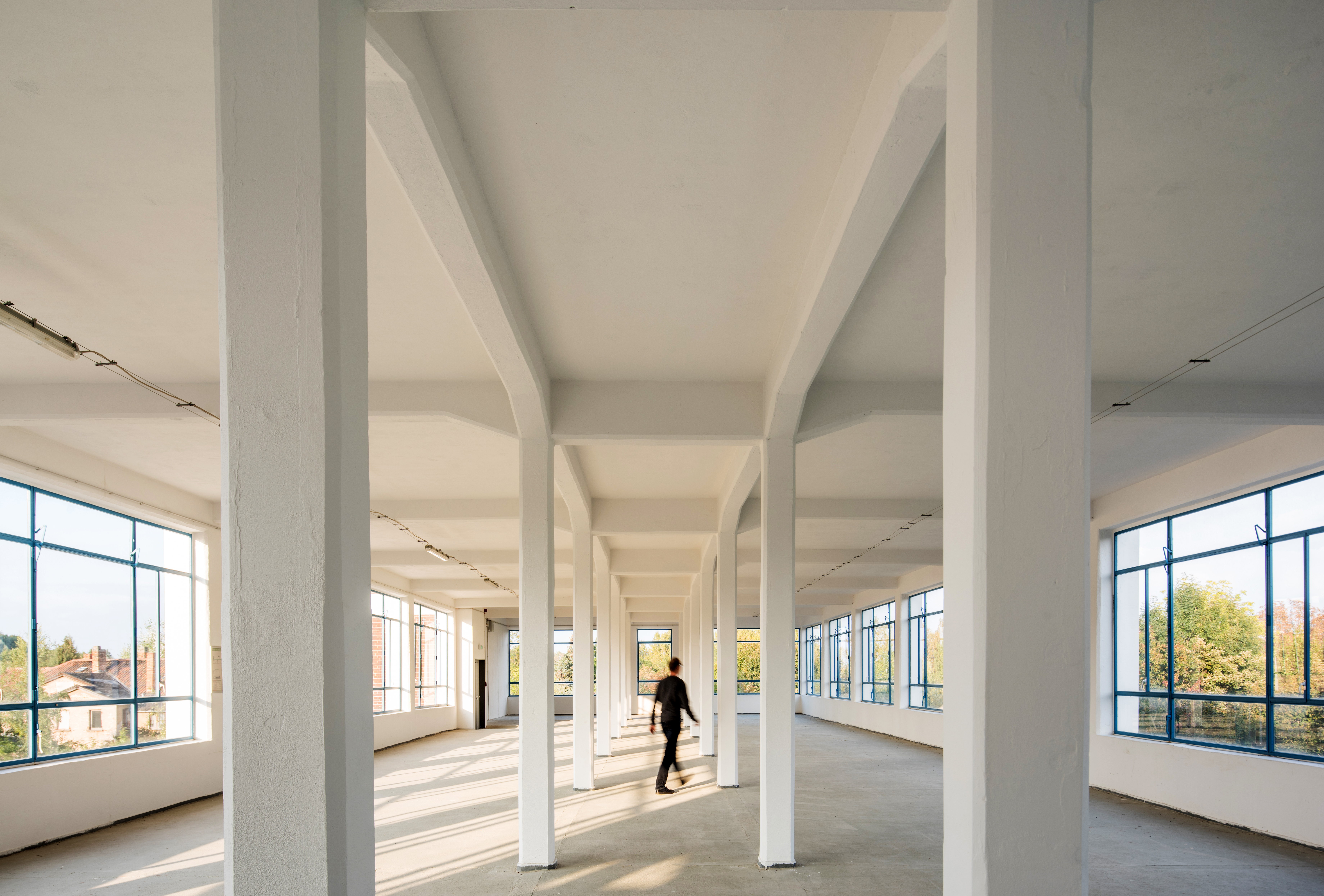
Headerbild: Eiermannbau in Apolda ©Thomas Müller; Impulsregion Erfurt-Weimar-Jena-Weimarer Land


